Mitochondrial ATP Preparation
Our ATP preparation is an innovative, laboratory-produced equivalent of adenosine triphosphate (ATP) – the basic energy molecule present in all living cells. Unlike naturally produced ATP, which degrades rapidly and is used inefficiently by the body (especially in conditions of aging or disease), this formulation is characterized by increased stability and durability. This allows the body to fully utilize ATP's potential as an energy carrier, neurotransmitter, and key regulator of repair and regeneration processes at the cellular level, thanks to its function in stimulating and protecting mitochondria.
Laboratory of the Highest Standards Collaborating with Foreign Research Laboratories
Toxicological Safety Accreditation
Years of Research Proving the Effectiveness of the Preparation
IMD Berlin Laboratory Report
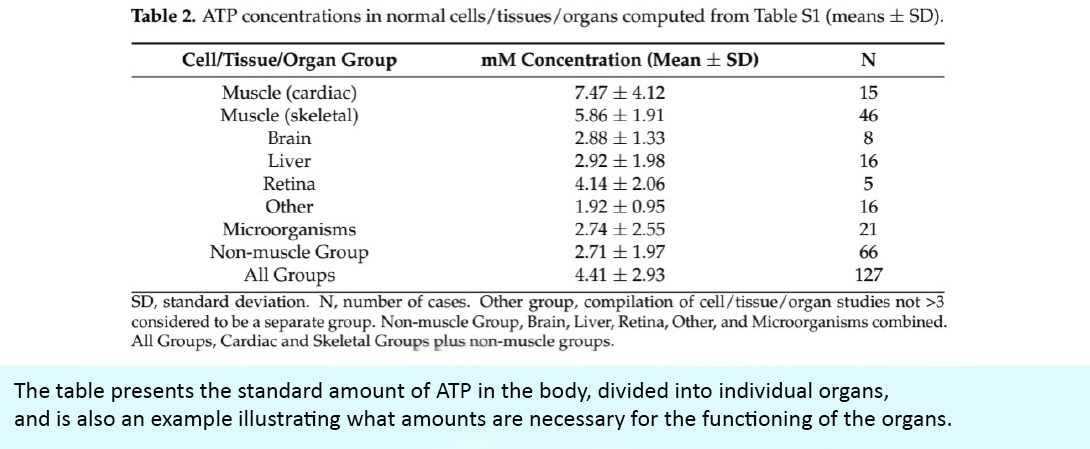
The intracellular ATP level at the beginning of the study was 2.79 µM (lower reference range).
After approximately 6 weeks of using the preparation, a significant increase in intercellular ATP was observed, reaching 7.59 µM (upper reference range; additionally, no mitochondrial dysfunction was observed). This increase in ATP confirms mitochondrial stimulation and provides evidence of the effectiveness of oral administration of the preparation. On the day of the study, a daily dose of the preparation (50 ml) was also administered.
The ATP level after discontinuing the preparation for the next 6 weeks was 3.67 µM (the preparation was not taken from July 22, 2022, to October 14, 2022).
The measurement demonstrated that the effects achieved during treatment with the preparation are sustained mitochondrial stimulation, which, in the case of pathological conditions, indicates the effectiveness of limiting and eliminating changes.


Sworn Translations of Research Results


ATP w Granulocytach
Granulocyty odgrywają kluczową rolę w odpowiedzi immunologicznej, zwłaszcza w walce z patogenami. ATP jest niezbędny do migracji, fagocytozy, degranulacji, czyli umożliwia granulocytom skuteczną ochronę organizmu. Granulocyty wykorzystują ATP do migracji i chemotaksji – umożliwia szybki ruch do miejsc infekcji, w których przeprowadzają fagocytozę i degranulację zależną również od zaplecza energetycznego. Dzięki zwiększaniu ilości ATP w granulocytach poprzez naturalną stymulację mitochondriów preparat wzmacnia odpowiedź immunologiczną, ponadto wpływa na poprawne gojenie ran, co jest kolejną z funkcji obronnych granulocytów. Nadmiar egzogennego ATP, w postaci na przykład adenozyny disodowej może mieć niestety wpływ negatywny w ponadnormatywnym podawaniu, jednak zasadnicza róznica polega na sposobie wchłaniania, procesie tworzenia preparatu oraz fakcie, że preparat stymulując ATP mitochondrialne wpływa w sposób zachowujacy homeostazę.
W organizmie mężczyzny, w badaniu z dnia 22.04.2024 widoczny poziom ATP w granulocytach wynosił 0,254nmol , po 2 miesiącach terapii preparatem, poziom ATP wzrósł do 0.522nmol czyli o 105,5%.
Natomiast w organizmie kobiety, odnotowano wzrost ATP w granulocytach aż o 121,3% , również po 2 miesiącach stosowania preparatu.